
Womenswear / T-shirt
Short-sleeve T-shirts
For a T-shirt quote, send the jersey weight, neckline, fit, artwork and colourways you want.
- Fabric composition and weight
- Fit, neckline and sleeve shape
- Print, embroidery, labels and packing
Women’s apparel manufacturing
T-shirts, hoodies, polo shirts, trousers and skirts for mid-market brands, retailers and sourcing teams.
Bring a tech pack, sample or reference images. We review fabric, fit and production requirements before quoting.

Start with the details you have. Tell us the garment type and what you still need to confirm.

The womenswear edit
Five categories, with the details open for discussion. Choose a starting point, look closer, then bring your direction into a brief.
Womenswear / T-shirt
For a T-shirt quote, send the jersey weight, neckline, fit, artwork and colourways you want.

Womenswear / Hoodie
Settle the fabric, silhouette, hood, rib, zip and decoration before comparing the quotation.

Womenswear / Polo shirt
Align body fabric, collar and cuff structure, placket details, fit and finishing before sampling decisions are fixed.

Womenswear / Trouser
Bring the intended silhouette, fabric behavior, waistband, pocket and fastening requirements into one product brief.

Womenswear / Skirt
Define shape, drape, lining, waistband, closure and length against the target customer and price position.
Illustrated product directions. Fabric, fit and construction are confirmed for your project.
All five categoriesThe details make the garment
Explore the decisions behind a style. Choose a detail to see what to bring, what to compare and what still needs confirmation.

Fabric & texture
Compare structure, weight and hand feel against the garment you have in mind. A colour on screen is a direction; the physical fabric settles the choice.

Neckline & rib
The neckline changes the character of a basic. Bring a reference for its shape, rib width and finish, then identify the fit details to review on the sample.
Seams & finishing
Make the seam, hem and edge treatment part of the brief. A close-up reference helps separate the look you want from the construction that needs technical review.
Print & embroidery
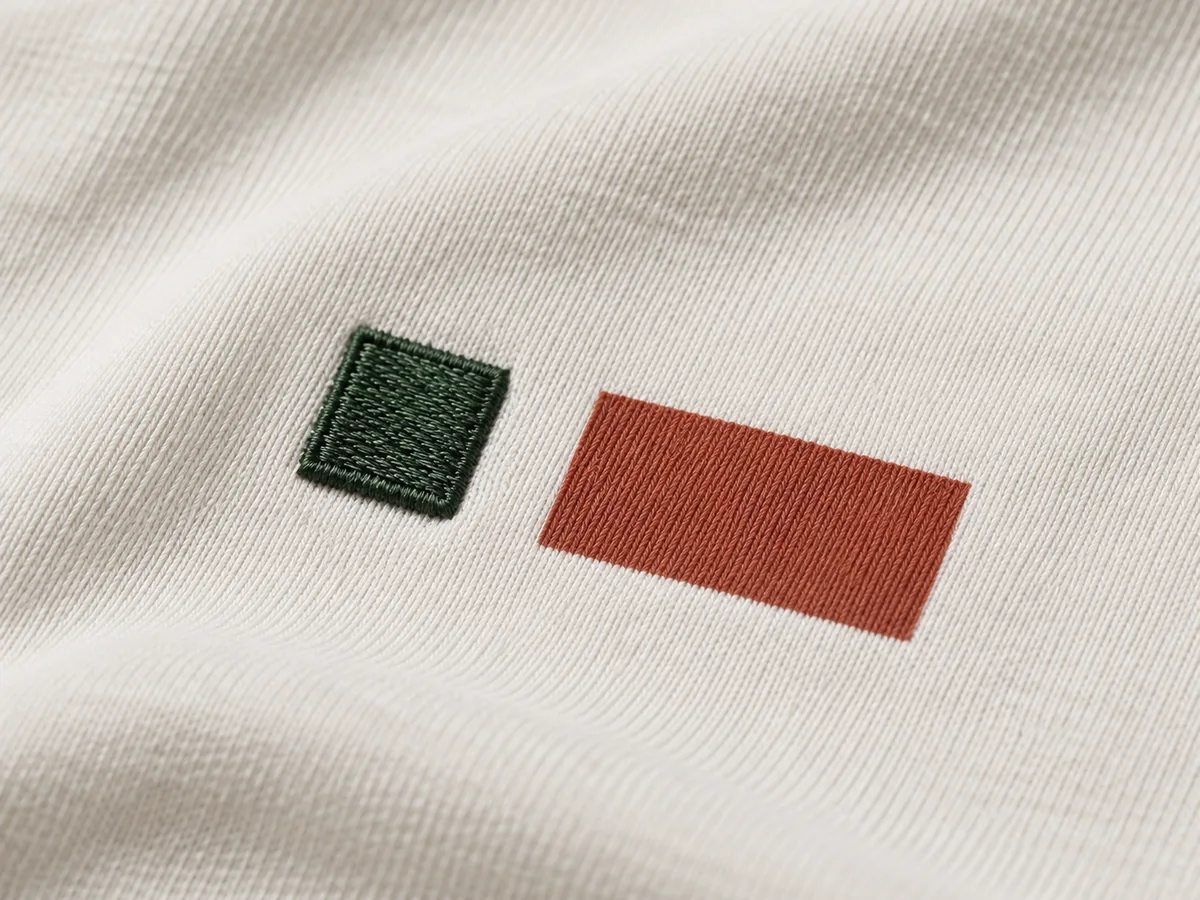
Review artwork scale, placement and colour with the fabric. Print and embroidery are different development choices; the application and its finish need sample confirmation.

Labels & trims
Bring main-label, care-label and hangtag requirements into the same brief. Confirm wording, dimensions and placement with the intended garment and destination market.

Packing & presentation
Think through the fold, individual packaging and carton identification together. Your packing reference should make the intended presentation and quantity breakdown clear.
Already have a detail in mind?
Bring it into your briefRanges are indicative and confirmed per style. Nothing on this page is a standing quotation term.
We do not claim garment certifications we do not hold, and a mill or material certificate is not presented as a finished-garment certification. Third-party testing is agreed per order.
Review the evidence boundariesAbout HACOLD
Womenswear development and manufacturing for growing brands, with the product details at the centre of the conversation.

Quantities and sample timing are confirmed for the style once the reference, fabric, construction and open decisions are reviewed.
Bring a tech pack, a sample or a clear reference. We work through the fabric, fit, construction and brand details with you before the next step is agreed.
Inside the production route
The sample room, the cutting table, the sewing line and the inspection table — each stop keeps a record you can request before the order is placed. The images are illustrative; dated project evidence is supplied during review.
See the full production route


Who we serve
The same factory question lands differently for a brand, a retailer, an importer and a sourcing team. Pick the path closest to yours and the decision content changes with it.
Compare all buyer typesYou develop your own styles and need specification, sampling and brand details closed in writing before the first run.
Open the brand pathYou work to a launch window with several styles per drop, so the sequence and the approval owner decide the outcome.
Open the retail pathYou compare offers and stand behind the decision, so the specification, quote scope and repeat conditions have to be comparable.
Open the importer pathYou coordinate answers from several stakeholders, so decision ownership, private-label inputs and approval records matter most.
Open the sourcing pathSite directory
The homepage keeps the entry points; each destination page holds the working detail. Start where your current question sits.
Latest buyer guides
Each guide takes one purchasing question and answers it end to end, with the decision boundaries rather than a summary of the obvious.
Read all buyer guidesWhat a packing instruction fixes, how cartons are built and marked, where packing goes wrong, and why the packing spec is an import document, not a detail.
Read the guideHow each decoration method is applied, what setup and minimum it carries, where each one fails, and how to match the method to the fabric and the artwork.
Read the guideWhat mass per unit area measures, why the same GSM can feel different across compositions, and how to specify weight so the sample matches the intention.
Read the guideFrequently asked questions
The current local product focus covers short-sleeve T-shirts, hoodies, polo shirts, trousers and skirts. Material, construction, supplier and commercial fit are confirmed for each brief.
View the product rangeShare a tech pack, reference sample, drawings or clear product direction, plus the target market, development stage, estimated quantity and timing context if known.
Prepare the project detailsMOQ currently runs from 200 to 500 pieces per style and sampling from 3 working days with a tech pack or reference sample to about 5 days from images only. The exact figure is confirmed for the style once fabric, construction, process and colour count are known.
Read the buyer FAQStart the project conversation
Share the product category, available files or references, target market, quantity context if known and the question blocking the next decision.